
Natural stone and terracotta tiling
Limestone, travertine, slate, quarry and terracotta. Laid on a solid bed, sealed in the right order, for old houses and new ones.
Stone is not a uniform product. Every box asks for a different decision.
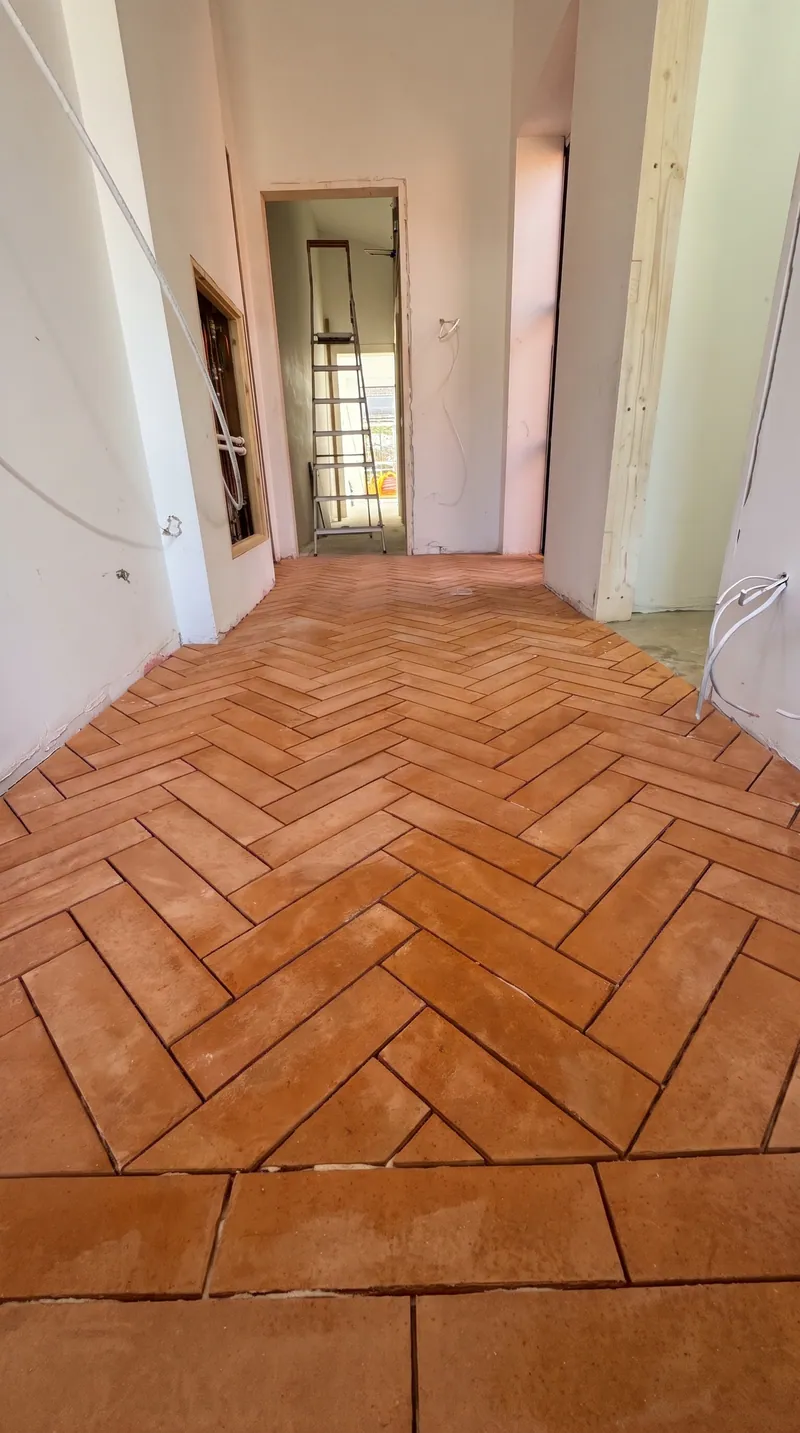
We lay it out before we fix it, moving pieces round so the colour and veining fall well across the room. Then the choice of adhesive, sealer and order of work comes from the stone itself. Our terracotta went down in semi-rapid adhesive, sealed with boiled linseed oil, waxed with antique ageing wax, then sealed again after grouting.
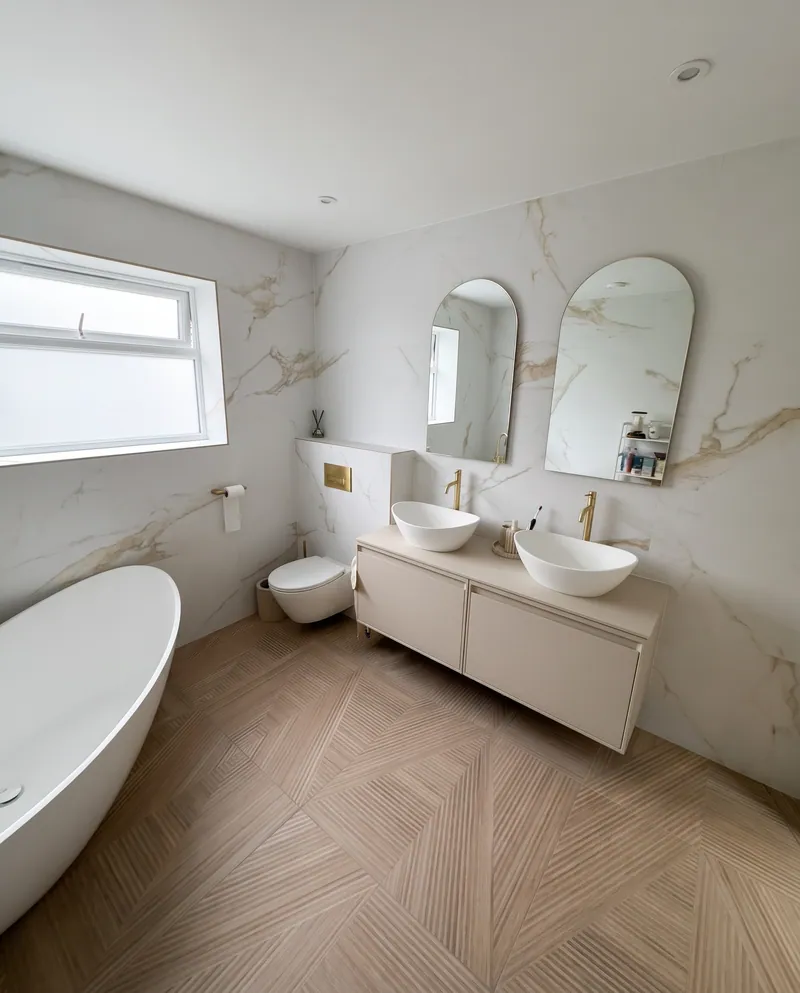
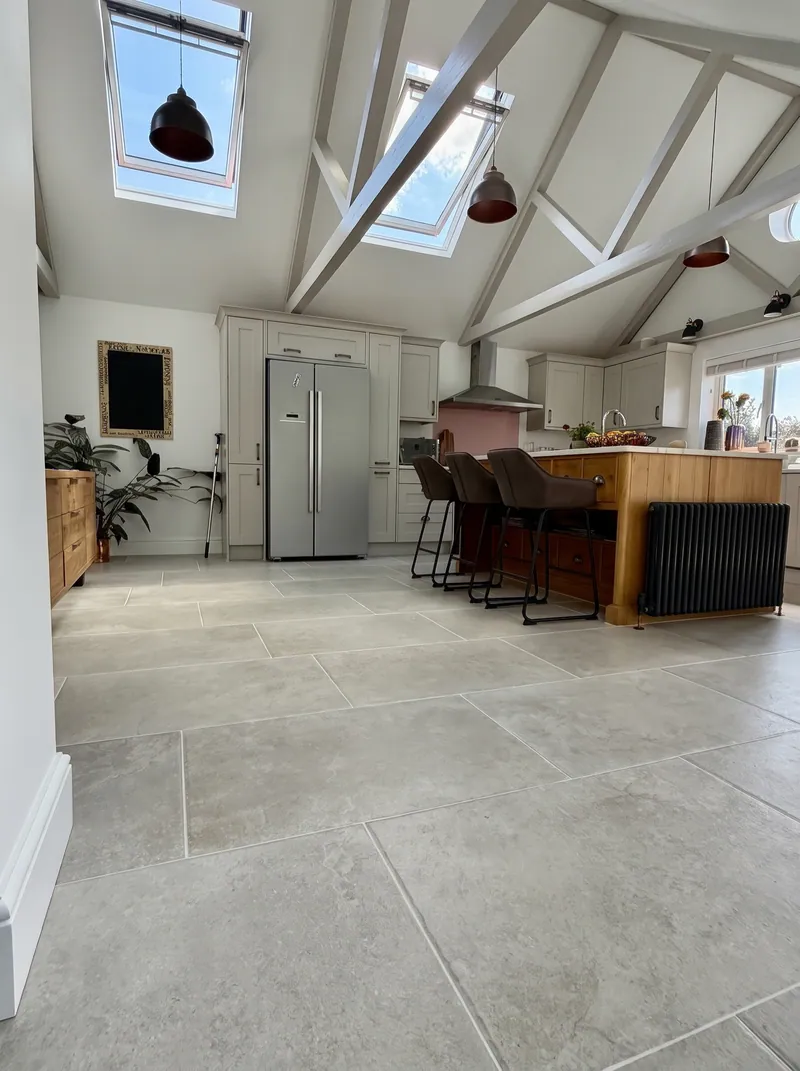
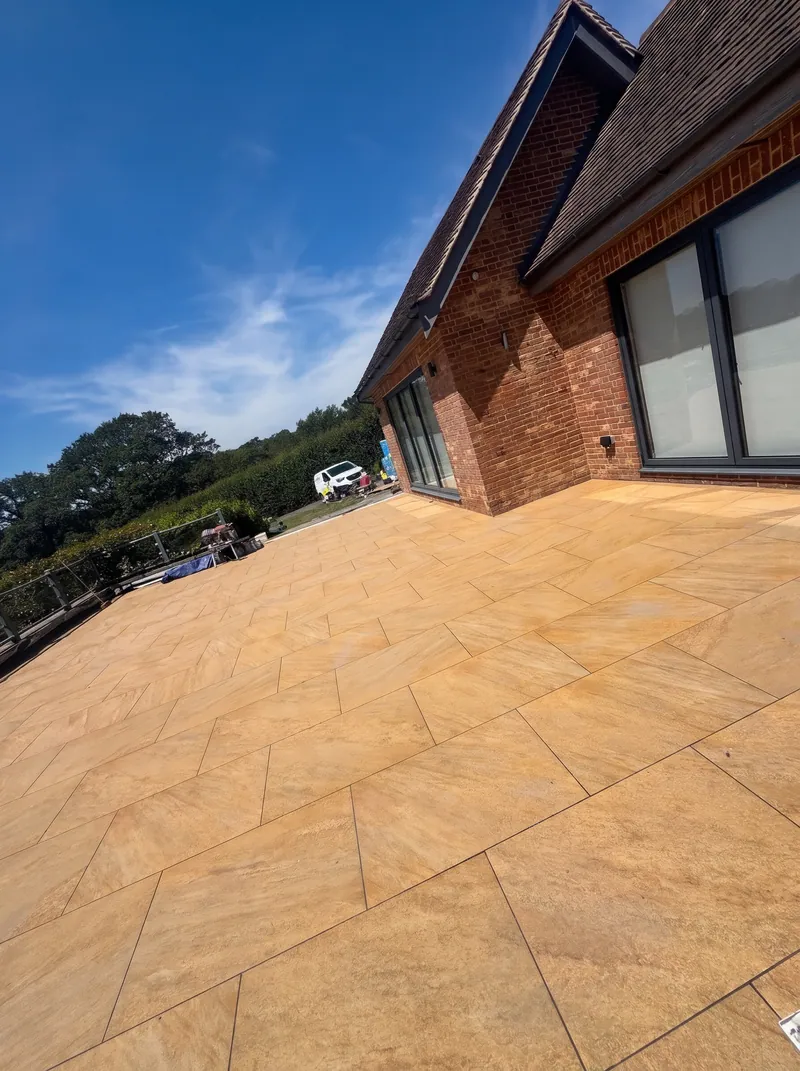
Our record runs from a 75m² travertine beach lodge and a 60m² travertine kitchen in Emsworth to smoked silver limestone in a cottage built in the 1600s, and a 25mm Carrara marble wet room tray.


Order of work
- Check the floorStone needs a stiffer, flatter base than ceramic. Moisture tested if it is new screed.
- Dry layBoxes opened and pieces mixed, so the colour and veining spread across the room.
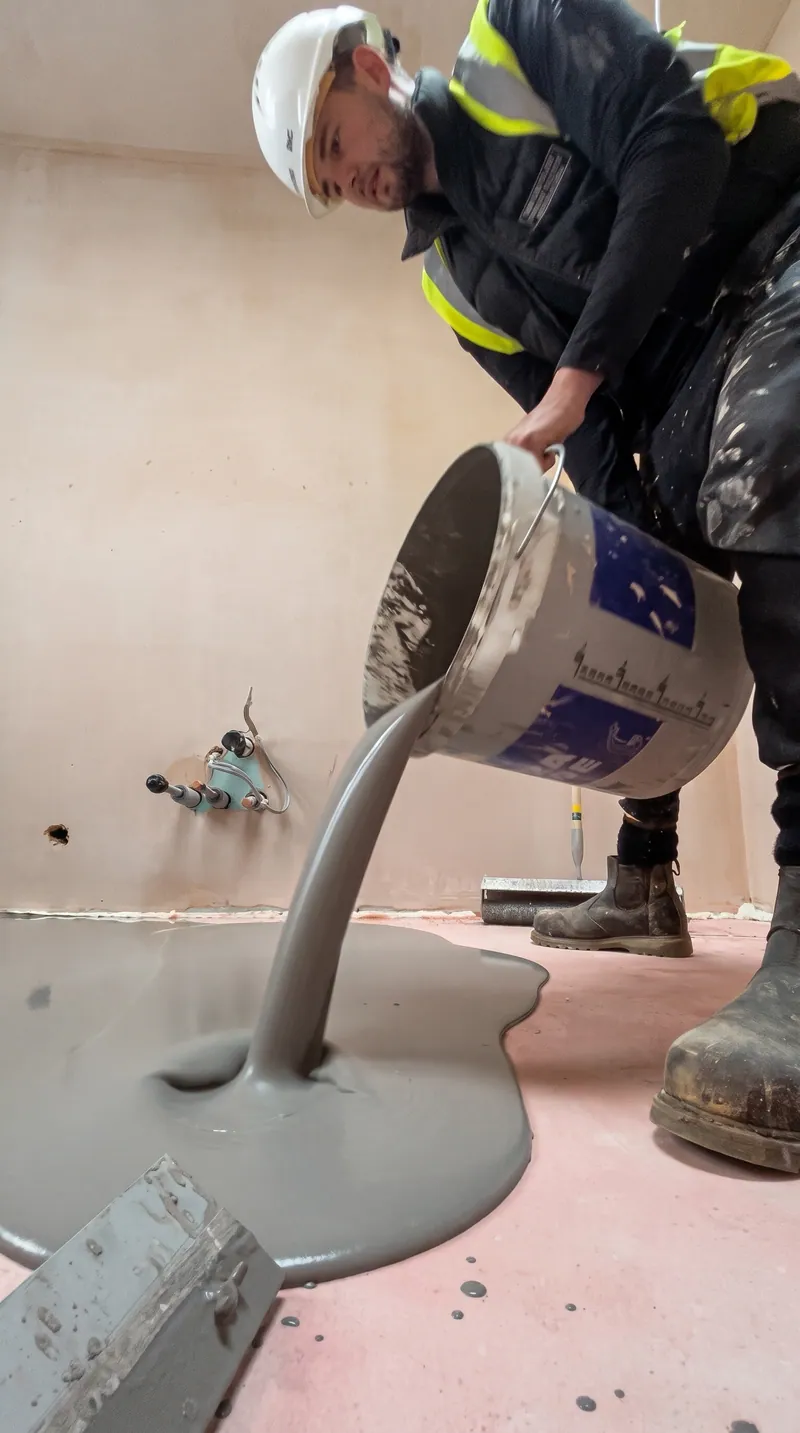
- Solid bedWhite adhesive under pale stone, rapid-drying where the stone is moisture sensitive, no voids.
- SealBefore or after grouting, as the stone and sealer manufacturer say. Often both.
- HandoverWe tell you what is on the floor, how to clean it and when to reseal.
Stone questions
Do you seal stone before or after grouting?
It depends on the stone, and manufacturer guidance decides. Sealing first usually stops grout staining porous stone. On our terracotta we sealed with boiled linseed oil, waxed with an antique ageing wax, then sealed again after grouting.
What goes underneath natural stone?
A solid bed of adhesive with no voids. White adhesive under pale stone so it does not show through, and a rapid-drying adhesive for moisture-sensitive stone so it does not warp or discolour.
How do I look after a stone floor?
Clean with a pH-neutral product, not bleach or acid. Reseal when water stops beading on the surface. How often depends on the stone and the room, and we will tell you what we used.
Is linseed oil right for terracotta?
It is a traditional finish for suitable new or reclaimed terracotta, and our project was specified that way. It is not for every floor: conservation guidance advises against it on old floors, raw linseed can attract mould, and oily rags can self-combust if left bunched up.
Can you work on a period or listed property?
We have worked in a cottage built in the 1600s and a manor house in Walberton. Older floors often need to breathe, which limits what can go underneath, and on a listed building the conservation officer needs to be involved first.
Can natural stone go on a timber floor?
Only with care. Stone tolerates much less movement than ceramic, around L/720 deflection against L/360. So the floor is usually stiffened and boarded first. We will look at it before saying yes.
Have a stone floor in mind?
Send the stone name or a photo, and what is under the floor now.