Floor preparation and underfloor heating
Priming, levelling, matting, moisture testing and heat mats. The part of a tiling job you never see, and the part that decides how long it lasts.
It's all in the prep. Know your product, know your prep, learn the process.
That has been on our Instagram for years, and we mean it. When tiles lift or crack, the reason is nearly always underneath them.
So we photograph the prep as carefully as the finish. Priming, levelling, moisture testing, matting and heating, in the right order and to the manufacturer's datasheet.
What goes under the tile
Levelled flat
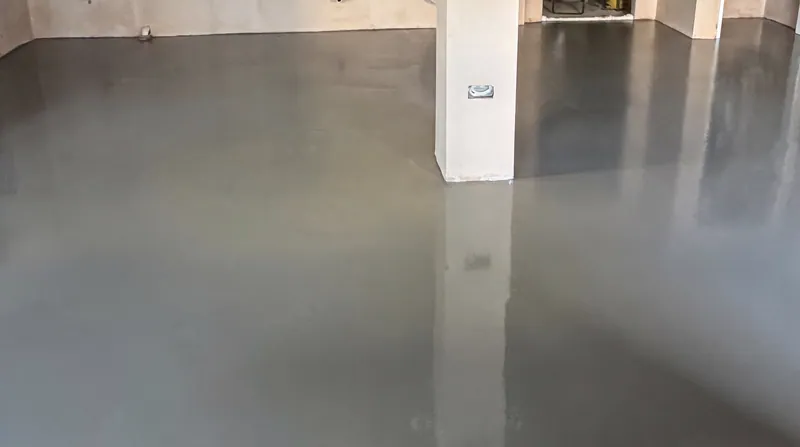
The Boardwalk, Chichester: 70m² primed and levelled. The area had multiple height issues, and it finished flat and ready for tile.
Exact build-ups
Just shy of 300m² needing an exact 22mm build-up to meet the timber flooring, levelling up 5mm. A number, not a guess.
Matting
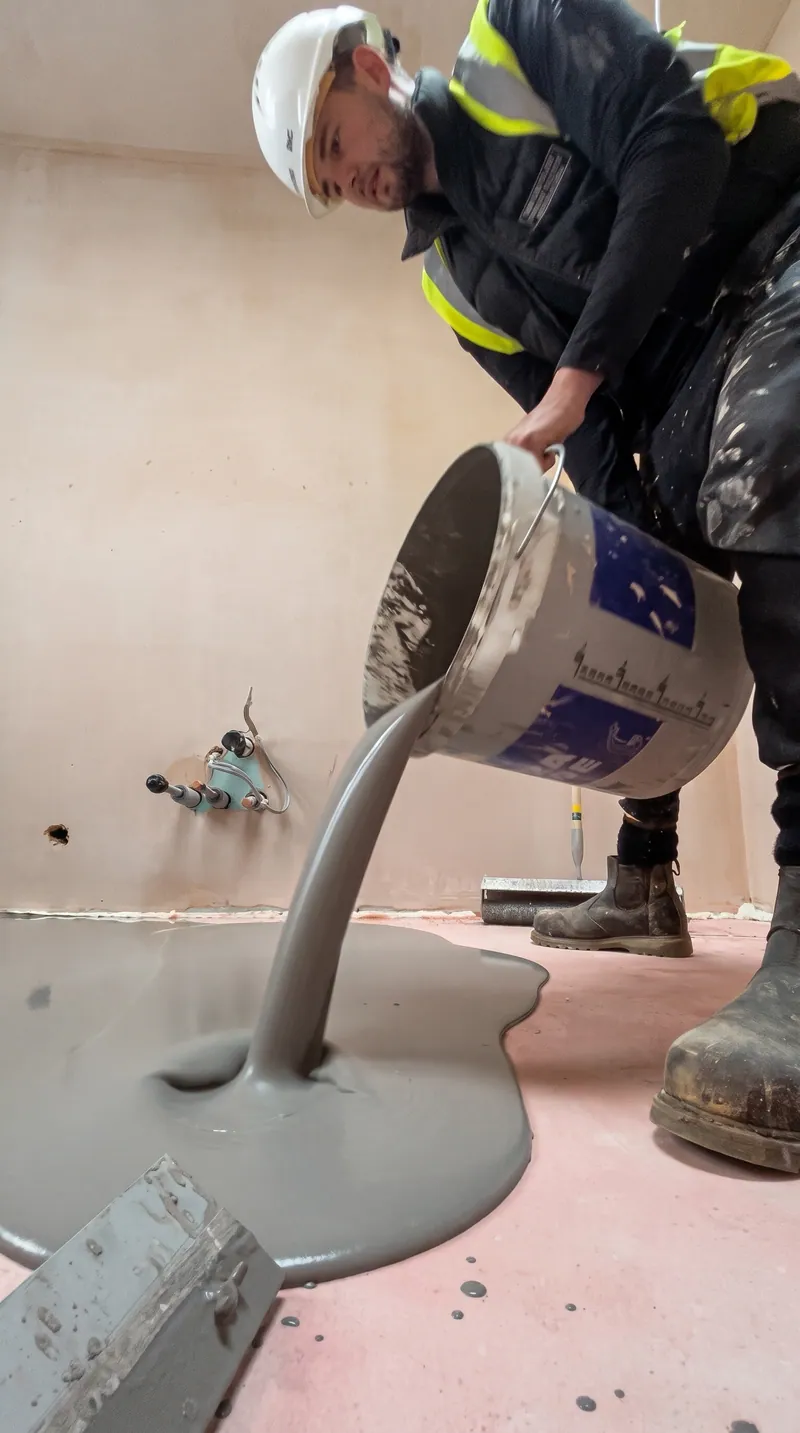
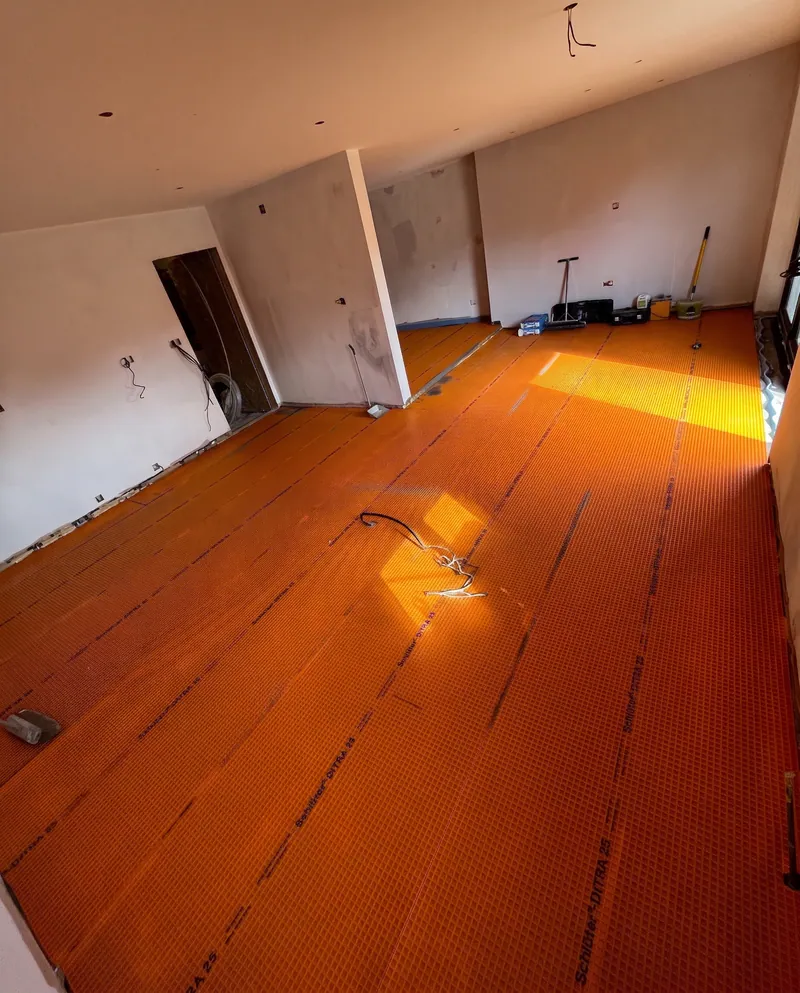
Phase 1 of a slate floor in Bognor Regis, matted and then laid. Mats take up sideways stress between floor and tile. They do not fix a floor that bounces.
Waterproofing
From priming to tanking, on a full Jackoboard system. Every joint, corner and pipe entry sealed before tile.

Primed and tested
A floor primed and left for moisture testing before the bathroom gets started. If the number is wrong, we wait.

Underfloor heating
We have tiled over Devi and Warmup systems, including Thermal Delta Board and Warmup DCM Pro in Middleton-on-Sea.
- Wet systems are commissioned before tiling, then allowed to cool.
- Electric mats go on an insulated board where the floor loses heat downward. The 30mA RCD and final connection are for your electrician.
- Adhesive and grout are flexible, with movement joints kept where the building has them.
- Tile floor temperature stays at or under 29°C in occupied areas, or 15°C above room temperature at most in wet rooms and perimeter zones.
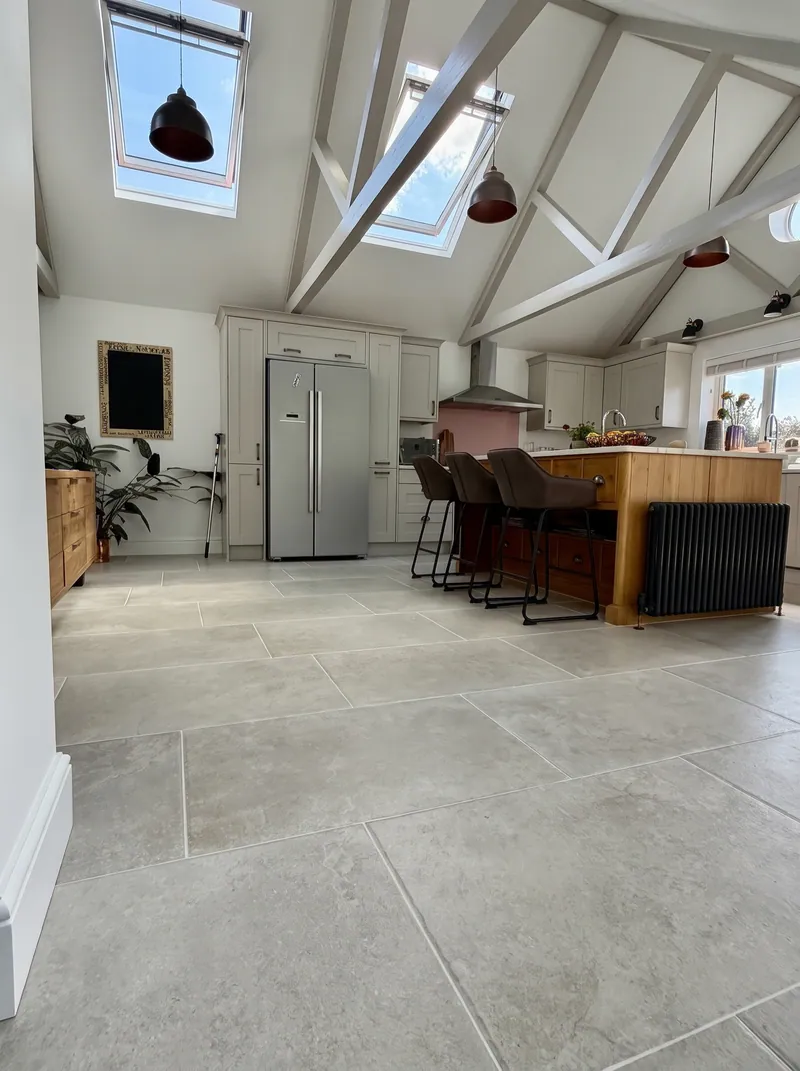
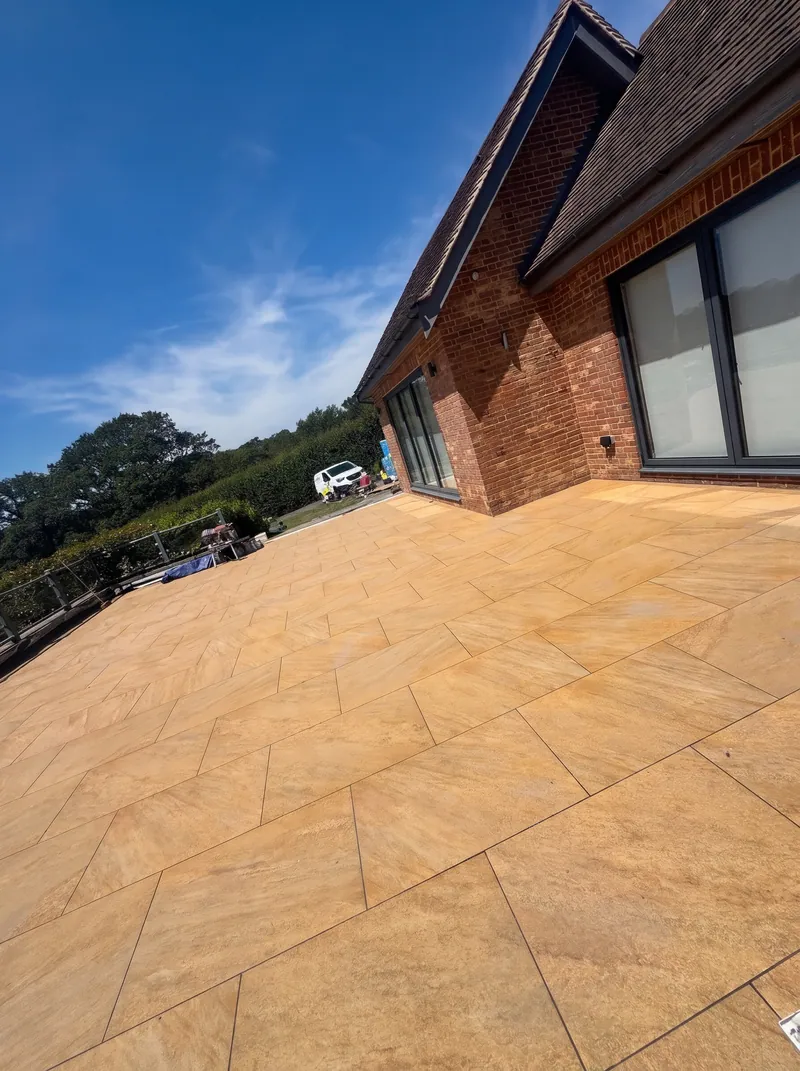
Our customer in West Wittering had underfloor heating throughout, with porcelain to the ground floor. An 80m² open-plan kitchen had 1000x1000 porcelain over anti-fracture matting and a heat mat.
Prep questions
Can you tile straight onto new anhydrite screed?
Not straight away. It needs to dry, its surface laitance sanding off with 60-grit 4 to 6 days after laying, and a suitable primer so the cement in the adhesive does not react with the gypsum. A moisture test should read about 75% RH before tiling.
How long does a new screed take to dry?
As an estimate, about 1mm a day up to around 40mm for anhydrite, then about 2 days per mm beyond that, and heating can speed things up from 7 days on with the temperature raised by 5°C a day to a maximum of 55°C. Sand and cement is estimated at 1mm a day up to 50mm.
What does matting actually do?
Decoupling mats take up sideways stress between the floor and the tile, on new screeds and cracked substrates for example. They do not fix a floor that bounces, and they do not replace movement joints. A springy timber floor needs stiffening.
How much can you level?
Levellers go up to around 30mm depending on the product. On a job with just shy of 300m² we had to hit an exact 22mm build-up, to meet the timber flooring next to it, by levelling up 5mm. The Boardwalk had 70m² with multiple height issues.
Does underfloor heating go in before the tiles?
Yes. Wet systems are commissioned before tiling, then allowed to cool. An electric mat goes in on an insulated board and needs a 30mA RCD, and that connection is for your electrician. The finished tile floor should stay at or below 29°C in occupied areas.
I have old black adhesive on my floor. Can you just grind it off?
Not until it has been tested. Old black adhesive and vinyl can contain asbestos, so we test first.
Not sure what is under your floor?
Send us a photo and tell us what you know. We will come and test what we can.